This project came upon me unexpectedly. Sasha Mihalova https://sashaweddings.co.uk/ and I had studied photography together many years ago, and ran into each other again by chance at a wedding, which I was conducting and she was photographing. Sasha had done a lot of research on shark behaviour and how to interact with them as safely as possible. I knew nothing at all about sharks, save for the usual hyperbolic headlines. While I was concerned about its dangers, for Sasha and for the sharks, her dedication to the Tiger shark project was infectious and before I knew it I was hot on her heels to Grand Bahama.
Since then I have dived deep below the misconceptions surrounding these ancient creatures, learning about the vital role sharks play in our ecosystem and the desperate need to bring them back from the brink of extinction. Humans kill around 100 million sharks every year, which is about: 274,000 sharks every day, 11,000 sharks every hour, and three sharks every second (read that again). Many are fished for the brutal shark fin soup market, others are suffocated as bycatch or harmed and killed through illegal fishing practices.
Without sharks as a keystone species, the entire ocean ecosystem could fall out of balance. Sharks not only maintain the species below them in the food chain, but indirectly seagrass and coral reef habitats. Seagrasses purify ocean water, provide fish nurseries, and support rich biodiversity. Its sediment is one of the planet’s most efficient stores of carbon, according to the Out of the Blue: The Value of Seagrasses to the Environment and to People report by the United Nations Environment Programme (UNEP). Coral reefs not only provide an important ecosystem for life underwater, they protect coastal areas by reducing the power of waves hitting the coast.
Sharks have been swimming in our oceans for more than 400 million years; that’s over 100 million years before the dinosaurs. They are older than trees. Sharks are not like other fish; they are slow to grow, late to mature, live longer and reproduce fewer pups. These majestic animals are not inherently dangerous beasts that habitually attack humans; they are vulnerable wild animals who need our action now more than ever.

The biggest THANK YOU!
To Geno, Deetric, Charles, Navi, Lisa, Vaughn, Chanarve, and all the amazing people of Grand Bahama, who helped make this crazy film a reality. See you again beneath the waves xx


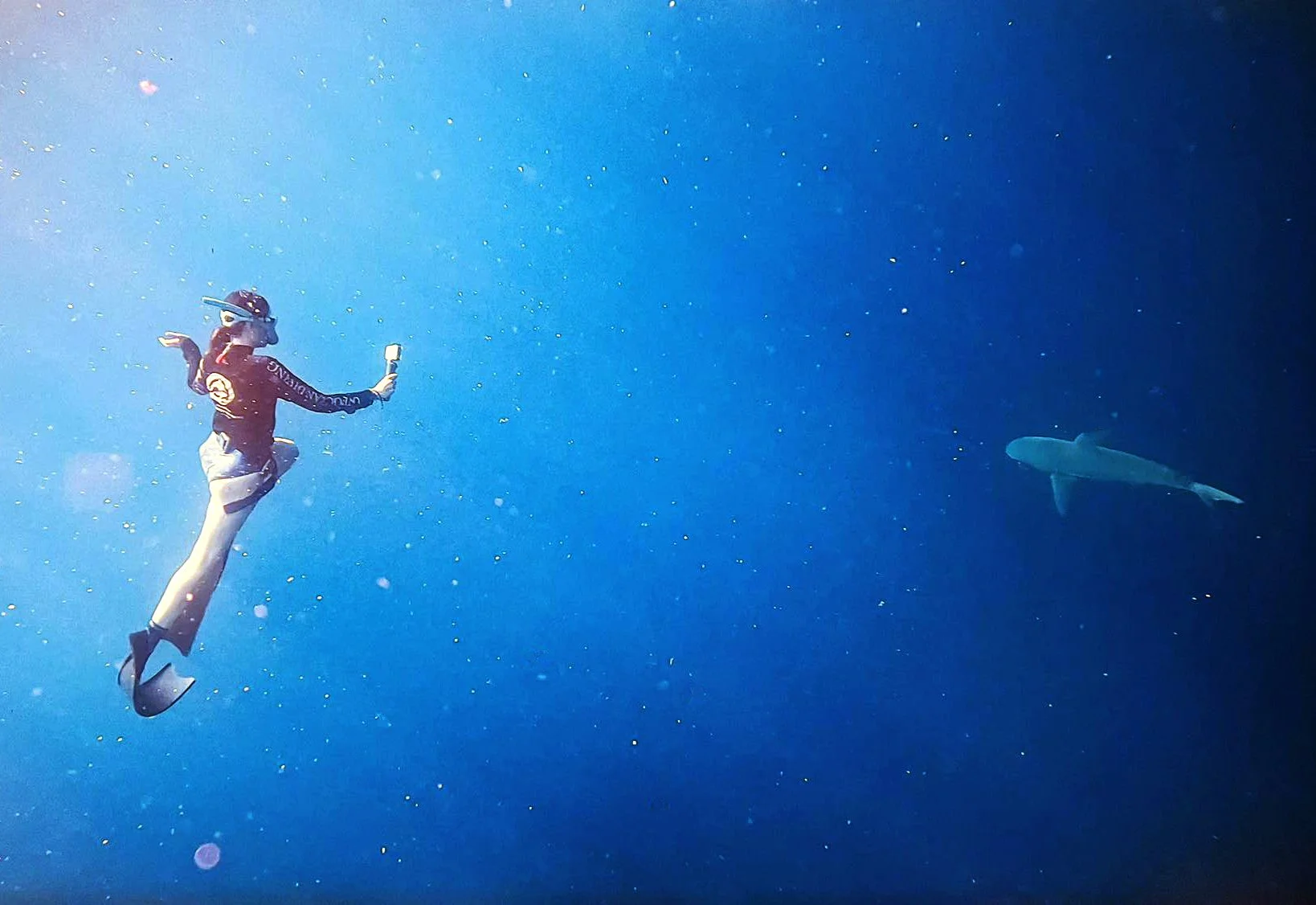
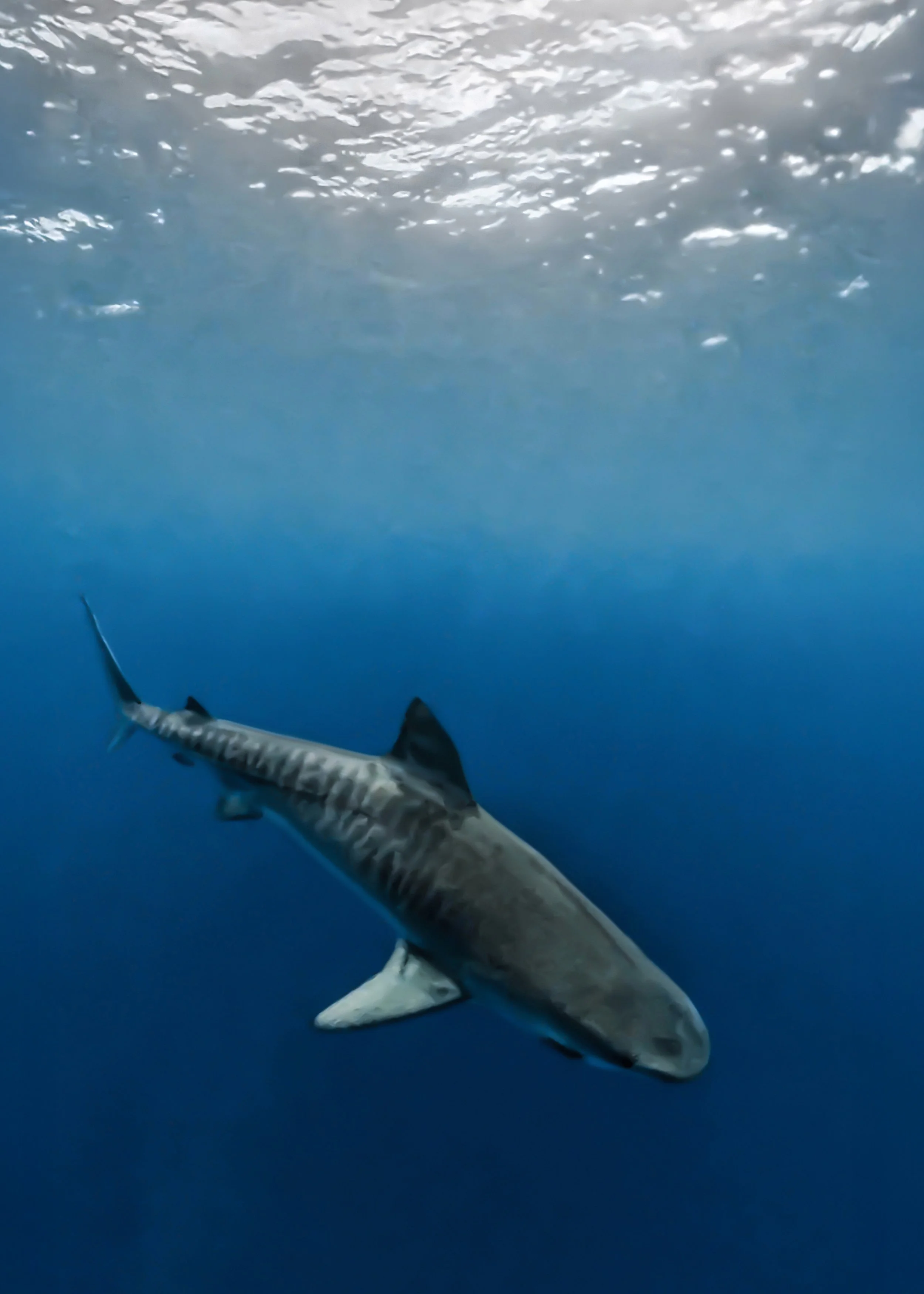
Fast forward a few years and I still can’t stop thinking about my shark experience in the Bahamas. So, I do what any reasonable person would do - I decide the time has come to dive with Tiger sharks myself! Sharks are apex predators and while I swam with Reef, Leopard and Nurse sharks in Grand Bahama, I knew I needed to be as prepared as possible for my swim with Tiger Sharks. The first step was to complete a Freediving course, which I did with Aquacity in Cornwall https://www.aquacityfreediving.com/ (who I can’t recommend enough). Then I headed to Hawai’i to swim with Tiger sharks alongside One Ocean Diving, who have the knowledge and expertise to back up their mission of creating positive interactions between humans and sharks. https://oneoceandiving.com/one-ocean-conservation
I was of course a little apprehensive as we got into the water, but then I became more nervous that no Tigers were going to join us. We had seen lots of Galapagos and Sandbar sharks and were just about to get out, when Gina spotted a beautiful female (likely pregnant) Tiger. She just glided peacefully by. At one point she looked like she was going to turn and head curiously back towards us. My long-held breath kept my heartbeat slow, but also the trust that these amazing creatures were allowing us to share the ocean with them and not seeing us as prey. We had been given a safety briefing by the safety divers and I had complete faith in them. We were lucky enough to see two Tiger sharks this dive.
On the way back to the harbour, we talked about the importance of sharks as keystone species in our ocean ecosystem. Did you know that we get 70% of our oxygen from the ocean? And as sharks help regulate healthy oceans they are vital to this oxygen production. I'm much more afraid of an ocean devoid of sharks than one filled with them. Mahalo nui loa One Ocean Diving for an amazing experience.
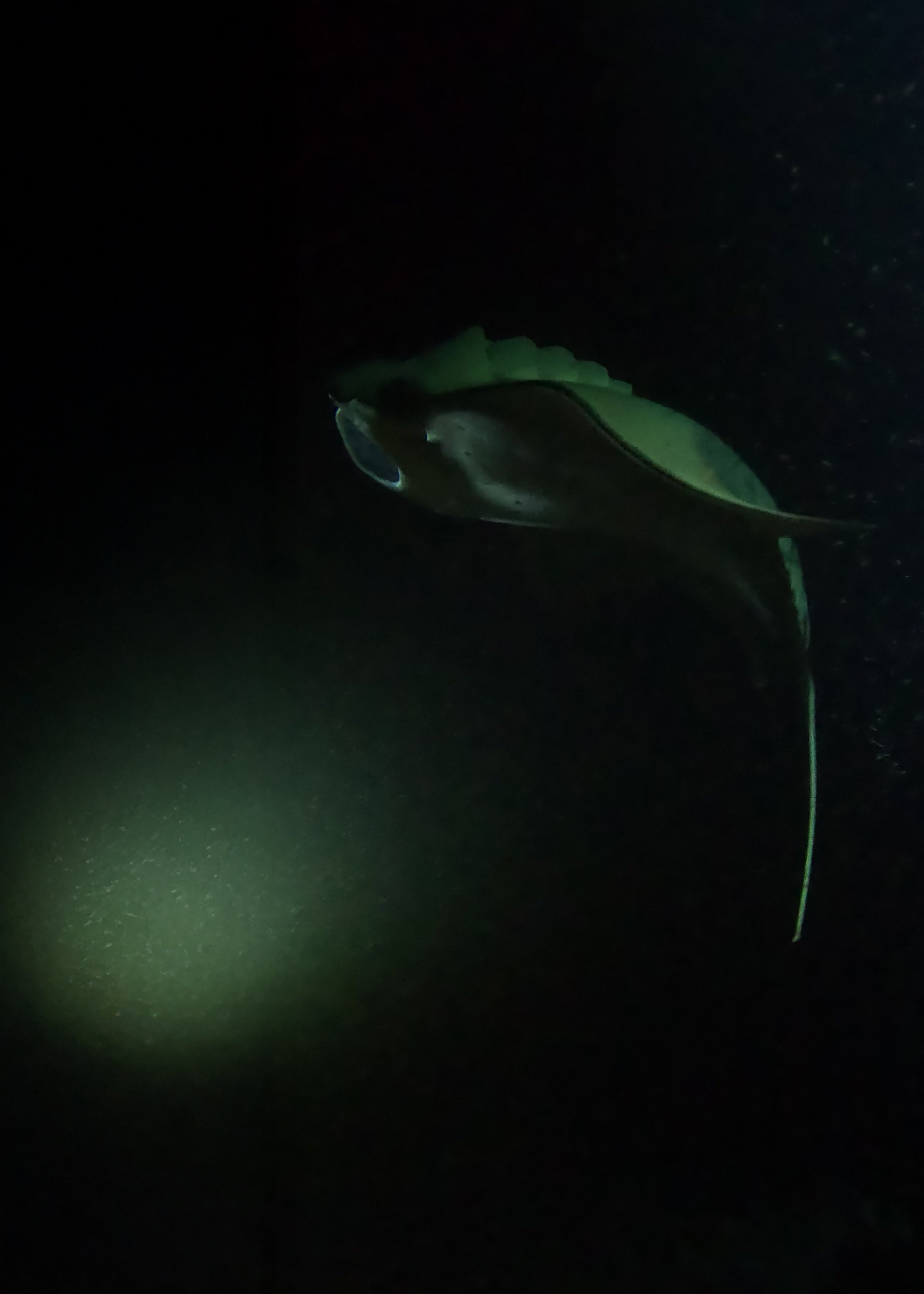
While in Hawai’i, I also had the privilege of scuba diving (at night!) with Manta rays. Just as with shark fin, the trade in manta gill plates means that both these culturally and ecologically vital keystone species are now critically endangered. I hope that by sharing my experiences and creating a deeper connection with these extraordinary animals, more of you will feel inspired to help protect them. Connection begins with understanding. So, learn all you can, and share the stories that reveal the true value of these prehistoric marvels: sharks, and the manta rays that evolved from them.